
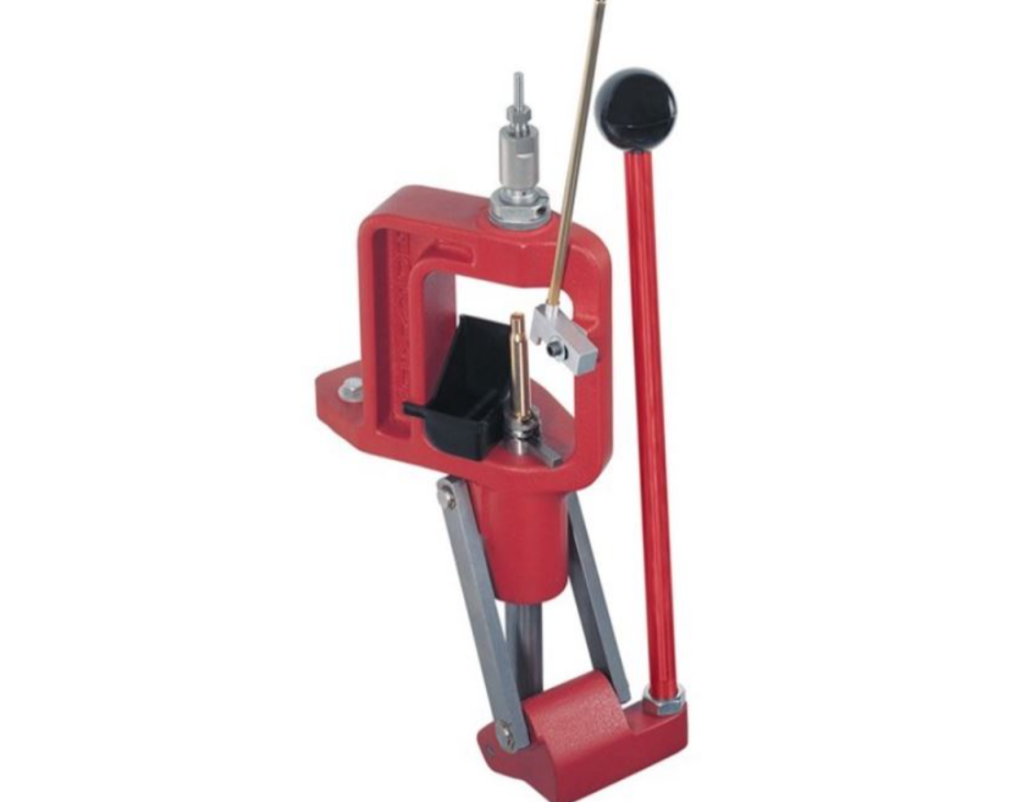
Reloading ammunition is a rewarding extension of the shooting hobby. It allows shooters to save money, tune loads for accuracy, and maintain independence from factory ammunition supply. But before you can begin crafting your own rounds, you need the right equipment—and that can feel overwhelming for beginners. With dozens of tools, brands, and opinions out there, it’s important to understand what you actually need and how each piece fits into the process.
This guide breaks down the essential equipment required to get started, explains the different types of presses, and covers key tools like dies, scales, and PPE. By the end, you’ll have a clear picture of what your first reloading setup should look like.
The Reloading Press: Your Bench’s Powerhouse
The reloading press is the heart of your setup. It’s the tool that resizes brass, seats bullets, and—depending on the model—performs many steps in the reloading process. There are three main types:
Single-Stage Press
A single-stage press performs one operation at a time. You insert the case, pull the handle, complete a step, then swap dies as needed for the next stage.
Pros:
- Inexpensive
- Extremely consistent
- Ideal for precision rifle reloading
Cons:
- Slower production
- Frequent die changes
Best for: Beginners, hunters, and long-range shooters who prioritize accuracy over volume.
Turret Press
A turret press holds multiple dies on a rotating head, allowing you to switch operations without removing and reinstalling dies.
Pros:
- Faster than single-stage
- Dies stay set and aligned
- Good balance between speed and simplicity
Cons:
- Slightly more complex
- Not as fast as a progressive press
Best for: Reloaders who want moderate output with minimal setup hassle.
Progressive Press
A progressive press performs multiple operations with each pull of the handle. For example, one case may be sized while another is primed and another is charged—all simultaneously.
Pros:
- Very high production rates
- Excellent for pistol shooters and competitors
Cons:
- Expensive
- More moving parts = more to monitor
- Beginner-unfriendly
Best for: High-volume shooters (IPSC, USPSA, Steel Challenge, 3-Gun) or experienced reloaders looking for speed.
Which is best overall?
For most new reloaders, a single-stage press is the ideal starting point. It teaches fundamentals, keeps things controlled, and produces extremely consistent ammunition. You can always upgrade to a turret or progressive press later.
Dies: The Tools That Shape Your Ammunition
Dies guide and form your brass during the reloading cycle. Each calibre requires its own set, and most sets include at least two or three dies.
Common Die Types
- Sizing/Decapping Die: Resizes the brass and removes the spent primer.
- Expander Die (mainly for pistol and straight-wall cartridges): Expands the case mouth to accept the bullet.
- Seating Die: Seats the bullet to the correct depth.
- Crimping Die: Applies a crimp to secure the bullet (sometimes part of the seating die).
Carbide vs. Steel Dies
For pistol cartridges, carbide dies are preferred because they don’t require case lube. Steel dies work but need lubrication to prevent cases sticking.
For bottleneck rifle cartridges, steel dies are standard; case lubrication is mandatory regardless.
Which is best?
Choose reputable brands such as Hornady, RCBS, Redding, or Lee. For beginners, a standard two- or three-die set is all you need.
Scales: Ensuring Accurate Powder Charges
Powder measurement is one of the most critical parts of reloading. Too much powder creates unsafe pressures; too little can cause dangerous under-ignition.
Balance Beam Scales
These mechanical scales are extremely accurate and require no electricity.
Pros: Reliable, long-lasting, inexpensive
Cons: Slower than digital scales
Digital Scales
Faster and easy to read but vary in quality.
Pros: Quick, convenient
Cons: Sensitive to drafts and bench vibration
Powder Measures & Tricklers
- Powder measure: Throws a consistent charge (ideal for high-volume loads).
- Trickler: Adds powder grain-by-grain for precise rifle loads.
Which is best?
A balance beam scale is the safest, most reliable starting point. Many reloaders eventually add a digital scale or auto-charger for convenience, but a manual scale remains the accuracy benchmark.
Case Preparation Tools
Before a case can be reused, it needs proper preparation.
Essential Tools Include:
- Case tumbler or ultrasonic cleaner: Removes carbon and dirt.
- Case trimmer: Ensures rifle brass stays within safe length specs.
- Deburring and chamfer tools: Smooth case mouths after trimming.
- Primer pocket cleaner: Removes residue for consistent primer seating.
For pistol shooters, case trimming is rarely needed, but rifle reloaders will use these tools often.
Personal Protective Equipment (PPE)
Reloading involves handling lead, primers, and fine powders. PPE ensures you stay safe at the bench.
Recommended PPE:
- Safety glasses: Protect from primer misfires and debris.
- Nitrile or latex gloves: Reduce exposure to lead residues.
- Dust mask or respirator: Helpful when handling dry tumbling media.
- Hearing protection: Useful when testing primers or working around machinery.
Safety is not optional—proper PPE is part of responsible reloading.
Final Thoughts: Building Your First Reloading Setup
Getting started in reloading doesn’t require buying every tool on the shelf. Start with the essentials:
- A reliable single-stage press
- Quality dies for your calibre
- A trusted balance beam scale
- Basic case prep tools
- Proper PPE
This foundation allows you to load safe, consistent ammunition without unnecessary complexity or cost. As your experience grows, you can upgrade your equipment to match your shooting volume and goals. Reloading is a hobby that grows with you—and investing in the right tools early sets the stage for years of accuracy, savings, and satisfaction.